Broken spring
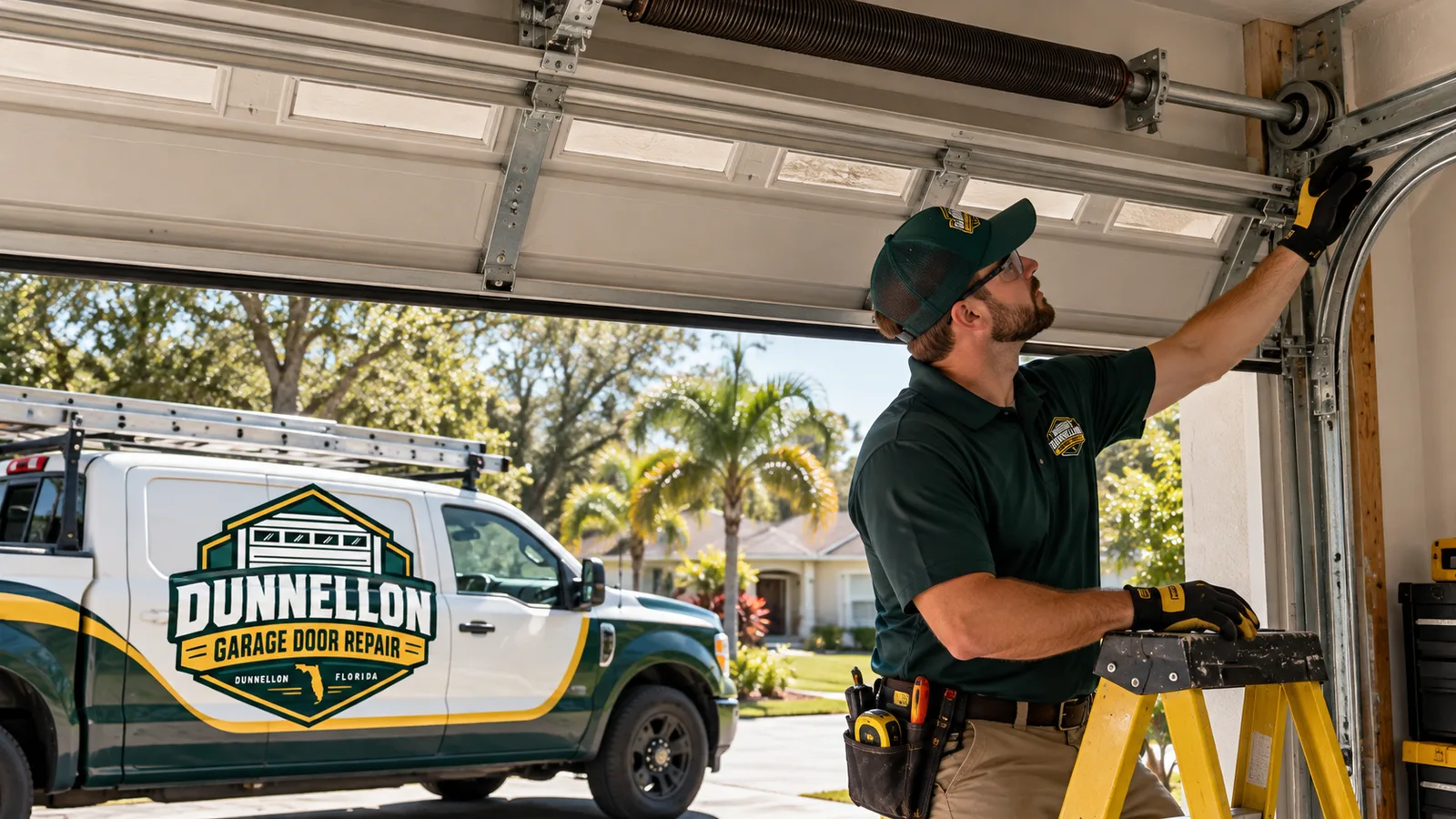
A loud bang followed by a door that feels extremely heavy often indicates a broken torsion or extension spring. Do not attempt to lift the door or wind the spring.
Serving Dunnellon, Florida & surrounding areas
Emergency Garage Door Service in Dunnellon, Florida
Get help with a snapped spring, loose cable, jammed door, failed opener, or garage door that will not close securely.
Urgent Safety Guidance
Emergency garage door repair in Dunnellon, FL is appropriate when a door is stuck open, will not close, has come off its track, or has a broken lifting component. Dunnellon Garage Door Repair can assess the immediate problem, identify damaged parts, and explain what must be corrected before the door can operate safely again.
A garage door is heavy even when it seems easy to move. Torsion springs, extension springs, lift cables, rollers, tracks, hinges, drums, and the opener all work together. A failure in one part can leave the full weight of the door unsupported or unevenly supported. Stop operating the door if it hangs crooked, jerks, drops, binds, or makes a sharp popping sound. Keep people and pets away from the opening, and do not loosen brackets or touch a spring or cable under tension.
If the problem is urgent but the door is stable, leave it in place until it can be inspected. If the garage is open to the home, secure the interior entry door and remove valuables from view when that can be done without walking beneath the garage door. Routine faults that do not create an immediate safety or security concern can be addressed through a planned service visit.
Warning Signs
A loud bang followed by a door that feels extremely heavy often indicates a broken torsion or extension spring. Do not attempt to lift the door or wind the spring.
A door that cannot close may leave vehicles, tools, and the entry to the home exposed. The cause may involve a cable, track, spring, roller, or opener.
A loose or tangled lift cable can make one side rise faster than the other. Continuing to run the opener can pull the door farther out of alignment.
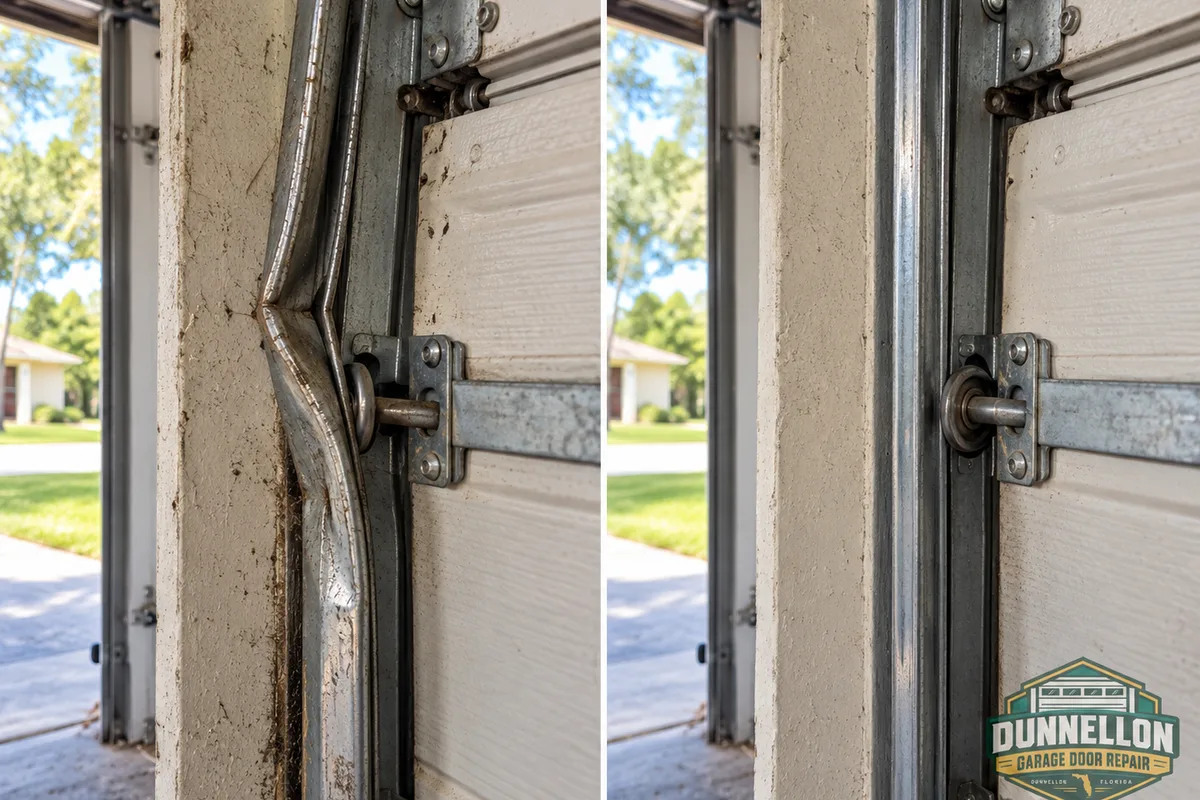
Bent track, an impact, or a failed roller can leave the door crooked or partly detached. Avoid pushing it back by hand because the remaining hardware may be carrying uneven loads.
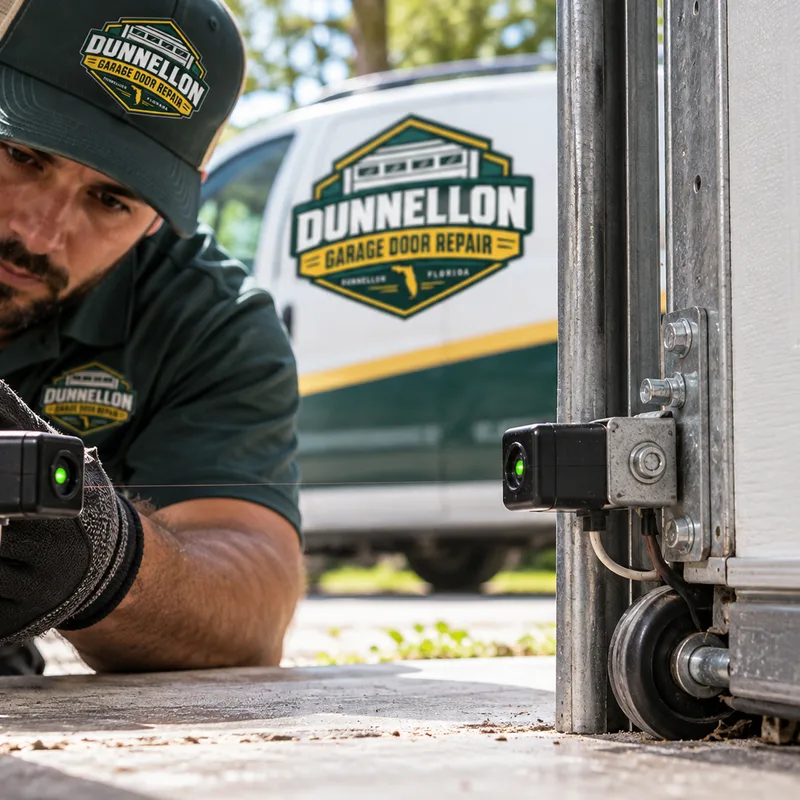
A door that reverses, stops short, or rises after touching the floor needs diagnosis. Photo-eye alignment, travel settings, resistance, or damaged door hardware may be involved.
A failed spring can prevent the opener from lifting the door even when the motor still runs. Pulling the emergency release does not make a heavy or damaged door safe to lift.
A stuck or unsafe garage door can leave your Dunnellon property exposed.
CALL NOW: (352) 496-9046Before the Technician Arrives
Disconnect wall controls from casual use and keep remote controls away from children. If the door is crooked, partly open, or has a hanging cable, do not use the opener again. Repeated attempts can bend the top panel, pull rollers from the track, or damage the opener rail.
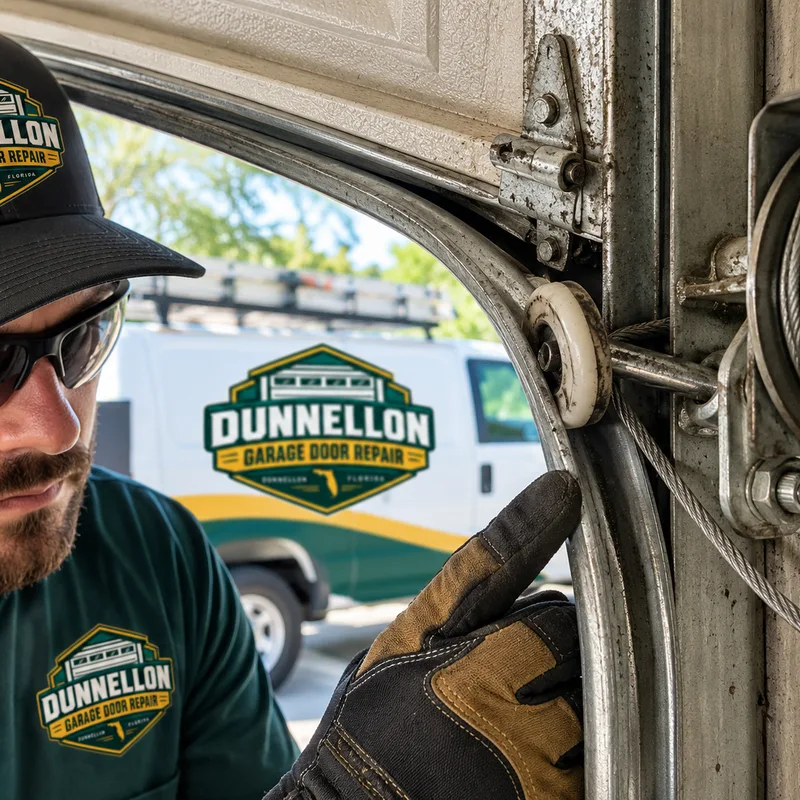
Do not stand or park beneath a suspended door. Never remove the bottom fixture because the lift cable is commonly attached at that point and may still be under tension. Avoid hardware-store spring adjustments, improvised cable clamps, and attempts to force rollers into the track. Spring winding and cable work require the correct tools, compatible parts, and control of the door's weight.
Florida thunderstorms can also cause a temporary power interruption. If an otherwise intact door stopped during an outage, wait for stable power and check whether the opener has power before assuming a mechanical part failed. Do not use the manual release when the door is open, crooked, unusually heavy, or visibly damaged. If the garage door is the only convenient entrance, use another safe entrance rather than passing under an unstable door.
Emergency Service Process
Tell Dunnellon Garage Door Repair whether the door is open or closed, whether it is crooked, what happened immediately before the failure, and whether a vehicle is trapped.
Move people, pets, and movable property away from the door without walking beneath it. Leave springs, cables, tracks, and opener adjustments untouched.
The visit should identify the failed part and check related components, including the second spring when applicable, lift cables, drums, bearings, rollers, hinges, tracks, and door balance.
The proposed work should identify the cause, the parts that need attention, and whether the door can be restored during the visit or requires a compatible part.
After repair, the door should travel evenly, remain balanced, close against the floor, and respond correctly to the opener's photo eyes and reversal system.
Prevent Further Damage
A crooked, hanging, or unsecured garage door can become more damaged with every attempted cycle. Describe what the door is doing so the immediate safety issue and likely repair scope can be assessed.
Repair Decisions
Many sudden failures are repairable when the door sections and supporting structure remain sound. A broken spring, worn roller, failed hinge, loose cable, misaligned photo eye, or opener fault may be corrected without replacing the complete door. The decision depends on the condition of the entire assembly, not only the part that failed first.
Replacement may deserve consideration when an impact has badly distorted several sections, the door cannot stay in its tracks, attachment points have torn away, or corrosion has weakened structural components. A damaged panel can affect how the door moves around the curved track, and a bent section may place added strain on rollers and the opener. The immediate goal is to make the opening safe. The longer-term recommendation should follow an inspection of the panels, hardware, track mounting, balance, and opener.
Dunnellon and the surrounding part of North Central Florida experience heat, humidity, heavy rain, and frequent thunderstorms. Moisture and temperature exposure can contribute to corrosion, swelling around wood framing, and deterioration of seals over time. Storm-related power interruptions may also reveal a door that is difficult to move manually because its springs are worn or its hardware binds. Those conditions do not identify the failed part by themselves, so diagnosis should be based on the door's actual movement and component condition.
Urgent Diagnosis
Homeowner FAQ
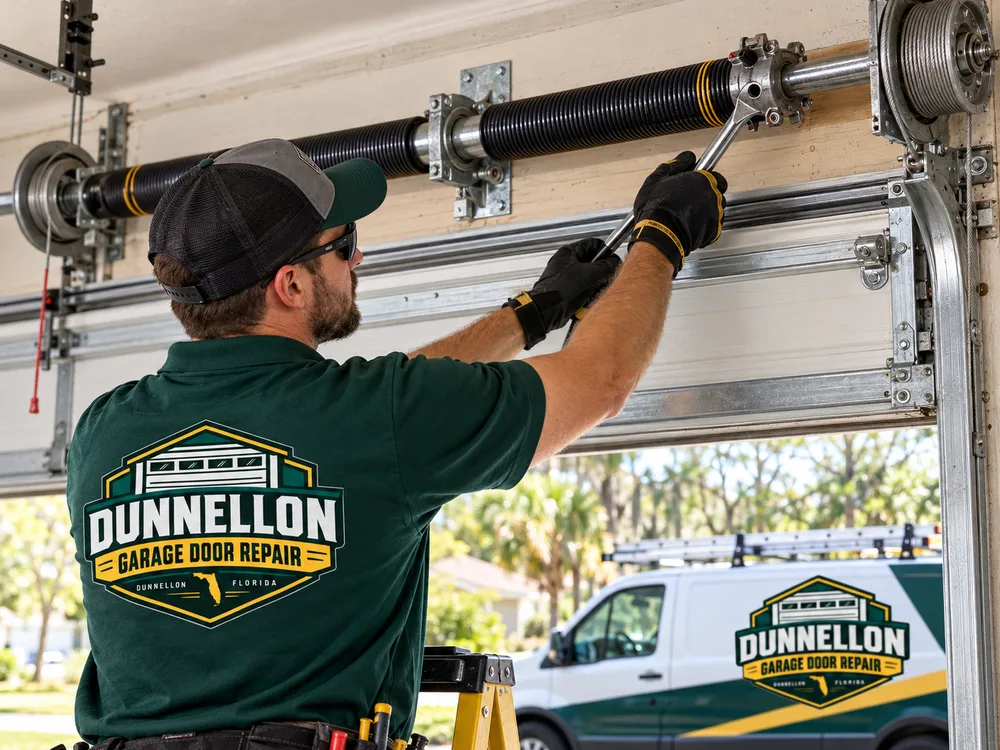
Do not operate a garage door with a confirmed or suspected broken spring. The opener is designed to move a balanced door, not lift its full weight, and manual lifting can lead to a sudden drop. A visible gap in a torsion spring above the door or a hanging extension spring beside the track is a strong warning sign.
Keep clear of the opening, stop using the opener, secure the door between the garage and the home, and move visible valuables only when it is safe to do so. Do not pull the emergency release if the garage door is crooked, damaged, or unsupported. Dunnellon Garage Door Repair should be told that the opening is exposed so the condition can be assessed as an urgent security problem.
A door may reverse because the photo eyes are blocked or misaligned, the close-force or travel setting is incorrect, or the door is encountering physical resistance. Florida rain and windblown debris can dirty the lenses near the floor, but bent track, worn rollers, or poor balance can create similar symptoms. Clear obvious debris without adjusting tensioned hardware, then arrange diagnosis if the problem continues.
A cable may sometimes be reset if it is undamaged and the underlying cause is corrected, but frayed, kinked, corroded, or stretched cable should be replaced. The technician also needs to inspect the drum, spring tension, bottom fixture, tracks, and door level. Putting a cable back on without correcting the cause can allow it to come off again.
A complete repair depends on diagnosis, access, and availability of a compatible part for the door. Common hardware may be addressed during the visit, while unusual spring dimensions, damaged panels, specialty doors, or extensive impact damage may require a follow-up. The first priority is identifying the hazard and establishing a safe repair plan.
Not necessarily. A humming opener can indicate an opener fault, but a broken spring, jammed roller, obstructed track, locked door, or damaged drive component can also prevent movement. Stop pressing the control because repeated attempts may overheat the motor or damage the top door section. Diagnosis should begin with the door's balance and hardware before opener settings are changed.
Describe whether the door is open, closed, crooked, or off track, and mention visible gaps in springs, hanging cables, impact damage, unusual sounds, or a trapped vehicle. The door material, approximate width, number of sections, and opener brand may also help identify likely parts. Photos can be useful when they are taken from a safe distance.
Get a Safe Next Step
A damaged or stuck garage door can block access and create an unsafe condition.